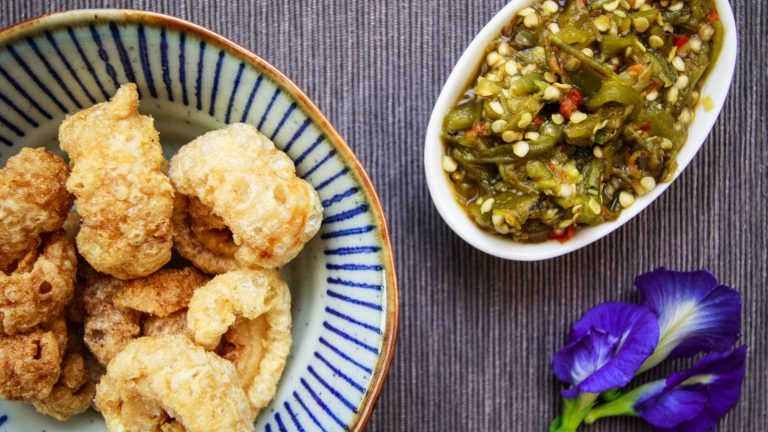
Each region of Thailand has its own culinary identity, with the style of cooking and the dishes eaten shaped by the past. While dishes associated with the north can now be found in the south and vice-versa, certain dishes are still closely linked with the region they originated from.

The canals, rivers, and agricultural plains of Central Thailand have all influenced the region’s dishes. So too has the fact that this area of Thailand has long been where the capital of the country is located and where royalty lived. From the days of Ayutthaya, through to Thonburi and then Bangkok, traditional royal Thai cuisine has been an inspiration for several of the dishes that originated here. And with this area traditionally being the main hub for commerce, it attracted overseas settlers, notably from China, whose influence also helped shape the food of the region.
In this round-up of Central Thai food, we select eight of the best-known and most popular dishes for you to try.
Gaeng khiao wan (green curry)
Made with green chilli paste, coconut milk, Thai eggplant, and sweet basil, this curry is typically cooked with chicken (gai) or beef (neua). Originating from royal kitchens in Central Thailand, it’s both fragrant and fiery.

Khao man gai (chicken and rice)
Adapted from Hainanese chicken rice, this Central Thai favourite features poached chicken served over fragrant rice cooked in chicken fat, with a spicy-sweet soy dipping sauce and clear broth on the side.

Khao pad (fried Rice)
Simple yet much-loved, Thai fried rice uses jasmine rice stir-fried with egg, onion, and fish sauce. There will usually be some protein added to it in the form of chicken, pork, shrimp or crab, and it’s often served with cucumber and lime.

Kuay teow reua (boat noodles)
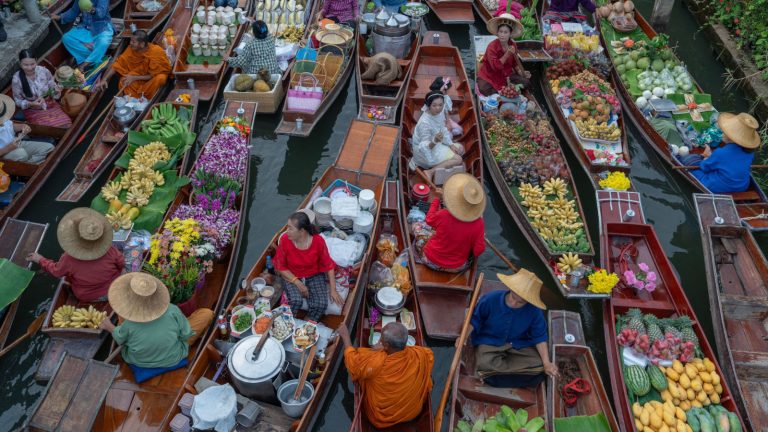
Boat noodles, kuay teow reua, originated in the canals of Bangkok and surrounding areas. These waterways were transport routes and would also see floating markets emerge. Vendors served people directly in bowls from small wooden boats, hence the name. Traditionally, the soup was dark and rich, made with beef or pork broth thickened with spices, herbs, and sometimes pig’s blood for extra flavour and colour. Common ingredients include rice noodles, sliced meat, meatballs, bean sprouts, morning glory, garlic, chilli flakes, vinegar, and sugar. Today, boat noodles are often served in small bowls, a nod to their riverside origins, and are an enduring symbol of Thai street food culture.

Pad kaprao moo (stir-fried pork with holy basil)
Although pad Thai (see below) may be Thailand’s official national dish, most locals will say pad kaprao is Thailand’s signature dish. A quick stir-fry of minced pork with holy basil, garlic, and chilli, often topped with a fried egg. A staple of Central Thai comfort food, it’s the go-to lunch dish for Thais across the country.

Pad Thai (stir-fried noodles)
Perhaps Thailand’s most famous dish, pad Thai, is a stir-fried noodle dish made with rice noodles, tofu, egg, bean sprouts, peanuts, and tamarind sauce. It was popularised during the 1930s as part of a national modernisation campaign and remains a quintessential Central Thai street food.

Tom kha gai (coconut milk soup with chicken)
A creamy coconut soup with chicken, galangal, lemongrass, and kaffir lime leaves. Milder than tom yum (see below), tom kha gai showcases the region’s love for combining coconut milk with herbs for depth and aroma.

Tom yum kung (sour shrimp soup)
A hot and sour shrimp soup infused with lemongrass, galangal, kaffir lime leaves, lime juice, fish sauce, and chilli. This aromatic dish captures the hallmark balance of flavours associated with Central Thai cuisine.