Thailand is a paradise for food lovers, and that includes vegetarians and vegans. With an abundance of fresh fruits, vegetables, and plant-based dishes, it’s easy to maintain a vegetarian or vegan diet while exploring the country. Here’s everything you need to know to enjoy Thailand’s vibrant food scene without compromising your dietary preferences.

(Photo: Shutterstock)
Ordering vegetarian and vegan food in Thailand
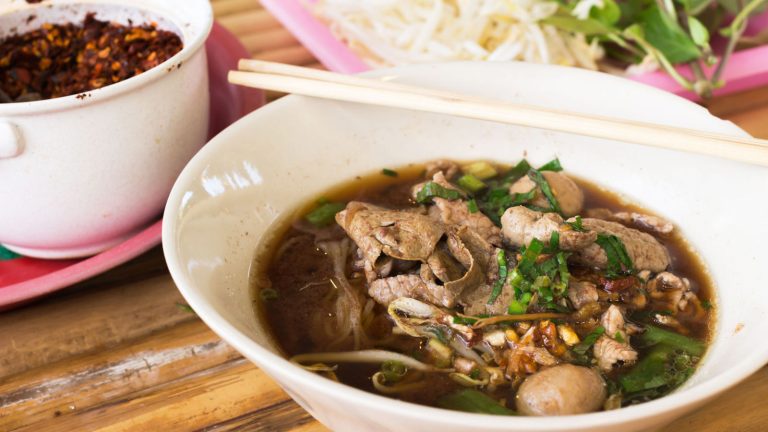
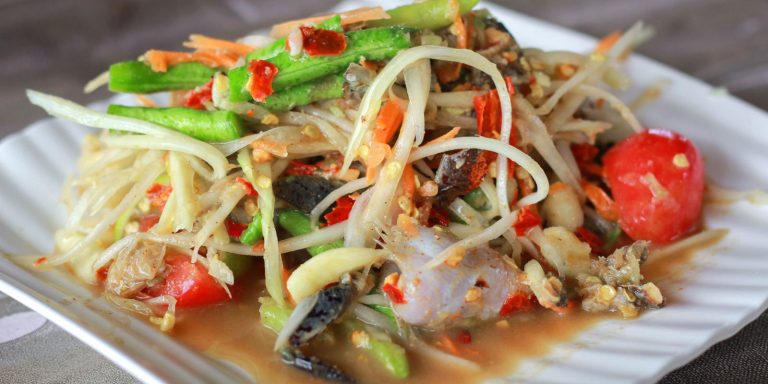
When ordering vegetarian food in Thailand, it’s important to be aware of a few key ingredients that may not be immediately obvious. While Thai vegetarian dishes rarely contain dairy (coconut milk is commonly used instead), they may include eggs, especially in stir-fried dishes like pad Thai. Additionally, some dishes that appear vegetarian might contain fish sauce (nam pla) or oyster sauce (nam man hoi), both of which are widely used in Thai cooking. Always double-check with the vendor or restaurant staff if you wish to avoid these ingredients.
Food courts in shopping malls are a convenient and affordable option for vegetarians, often offering a variety of plant-based dishes in an air-conditioned setting. You can also look for vegetarian restaurants that display a distinctive yellow flag with red Thai or Chinese script, which signifies that they serve vegetarian or vegan food.
Understanding ‘Jay’ food
In Thailand, the term for vegetarian is ‘mangsawirat‘, but if you’re vegan, you’ll want to look for food labelled ‘jay’. The concept of jay food originates from the Jain religion, which follows a strict vegetarian diet and even excludes certain root vegetables like onions and garlic. If you’re looking for entirely plant-based meals with no animal products or strong-smelling ingredients, asking for jay food is your best bet.
Helpful Thai phrases for ordering vegetarian food
Vegetarian: mangsawirat
Vegan: jay
I eat only vegetarian/vegan food:
(Female) ดิฉันกินเจค่ะ (di-chan kin jay ka)
(Male) ผมกินเจครับ (pom kin jay khap)
I eat only vegetables:
(Female) ดิฉันกินแต่ผักค่ะ (di-chan kin tae pak ka)
(Male) ผมกินแต่ผักครับ (pom kin tae pak khap)
Restaurant: raan ahaan
Vegetarian restaurant: raan ahaan mangsawirat/jay
Fish sauce: nam pla
Oyster sauce: nam man hoi
Soy sauce: nam see-ew
Tofu: tao-huu
Vegetable oil: nam man pheut
Please don’t use fish sauce:
(Female) ไม่ใส่น้ำปลาค่ะ (mai sai nam pla ka)
(Male) ไม่ใส่น้ำปลาครับ (mai sai nam pla khap)
Please don’t use oyster sauce:
(Female) ไม่ใส่น้ำมันหอยค่ะ (mai sai nam man hoi ka)
(Male) ไม่ใส่น้ำมันหอยครับ (mai sai nam man hoi khap)
Please use vegetable oil:
(Female) ใส่น้ำมันพืชค่ะ (sai nam man pheut ka)
(Male) ใส่น้ำมันพืชครับ (sai nam man pheut khap)
If pronunciation is tricky, consider asking your hotel staff to write these phrases down in Thai. Online translation apps can also be helpful, but a written note ensures clarity. And remember, a friendly smile goes a long way in Thailand!
Enjoying Thailand’s tropical fruits
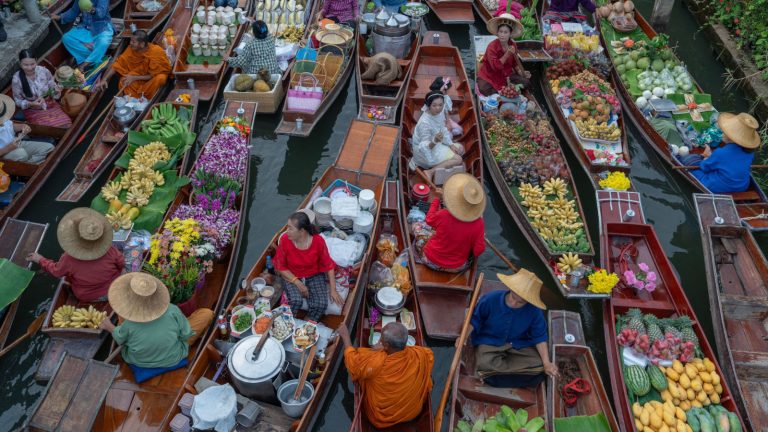
Thailand is home to an incredible variety of tropical fruits, making it easy to stay healthy and refreshed while travelling. Fresh fruit stalls are common in markets, and smoothie stands offer delicious, natural drinks to cool you down. Many cafes and hotels serve smoothie bowls, which make for a nutritious and energising breakfast.

(Photo: Roy Cavanagh)
The Vegetarian Festival
Thailand hosts an annual Vegetarian Festival (Tesagan Kin Jay). The exact date varies each year but is usually in September or October, lasting for nine days. This festival is celebrated in various locations, including Bangkok, Chiang Mai, Krabi, Pattaya, Phuket, and Trang. During this time, many restaurants and street vendors offer a wide selection of vegetarian and vegan food.

(Photo: Shutterstock)
Finding vegetarian and vegan-friendly places
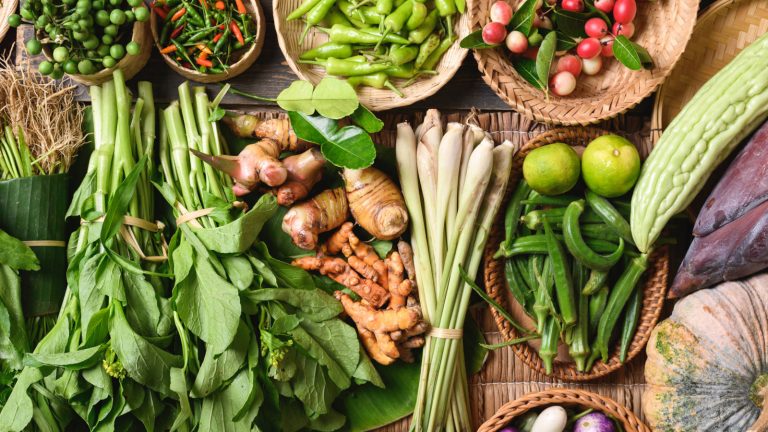
Vegetarian-friendly restaurants and food stalls are scattered throughout Thailand. If you’re unsure where to start, ask for recommendations at your accommodation. Apps like Grab can also help locate nearby vegetarian restaurants, but visiting in person rather than ordering delivery supports local businesses more directly.

(Photo: Shutterstock)
Many hotels in Thailand are becoming more accommodating to plant-based travellers, offering vegan-friendly amenities such as cruelty-free toiletries, non-feather pillows, and organic local produce as part of their sustainable tourism initiatives.
For up-to-date recommendations, Happy Cow is an excellent online resource for finding vegetarian and vegan restaurants throughout Thailand.
With a little preparation and these handy tips, enjoying delicious vegetarian and vegan food in Thailand is both easy and rewarding. Whether you’re exploring bustling cities, relaxing on the islands, or venturing into the countryside, you’ll find plenty of flavourful and satisfying plant-based options to enjoy.