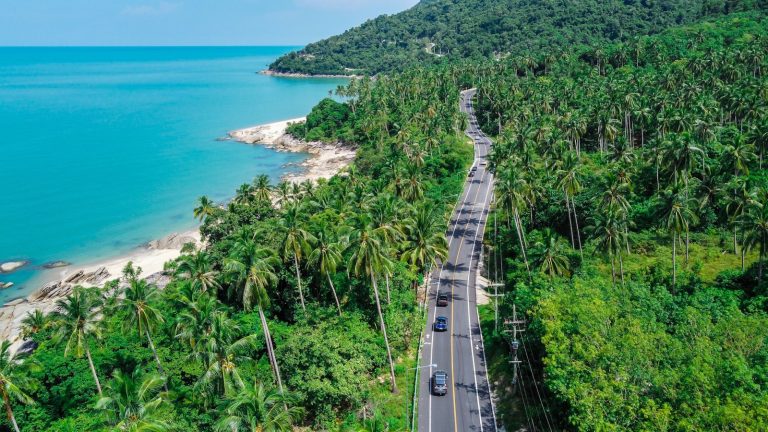
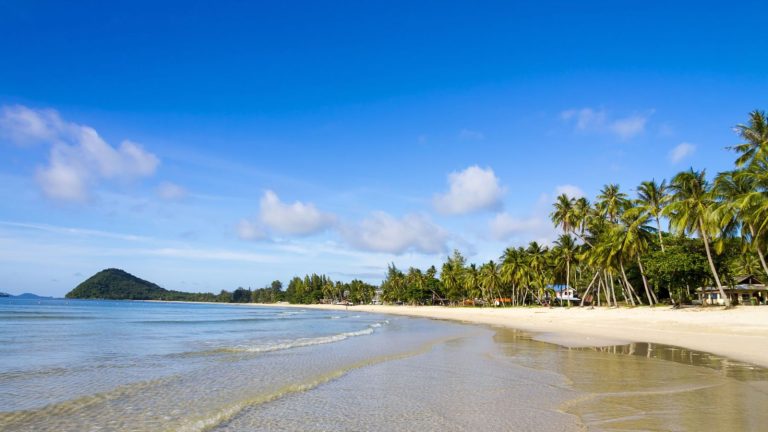
The newest instalment in the Jurassic Park dinosaur saga, Jurassic World: Rebirth, debuted in July 2025 with scenes filmed across the dramatic landscapes of Krabi, Phang Nga, and Trang. But Thailand’s connection to dinosaurs isn’t confined to the big screen. The country is home to some of Southeast Asia’s most significant palaeontological sites. Many of these sites are located in northeast Thailand, a region known as Isaan.
Jurassic World: Rebirth
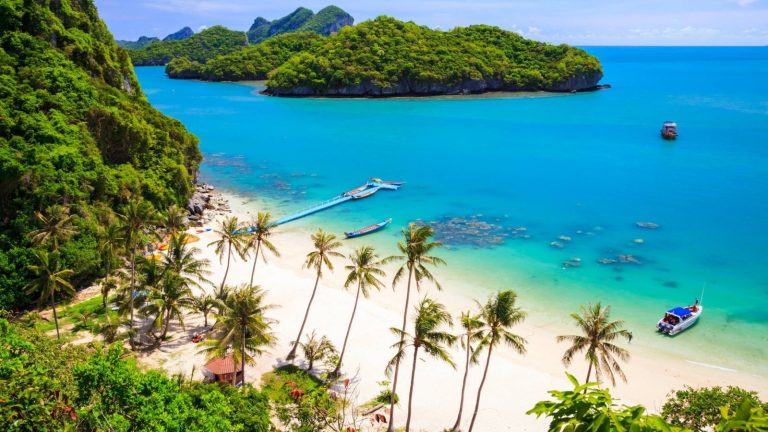
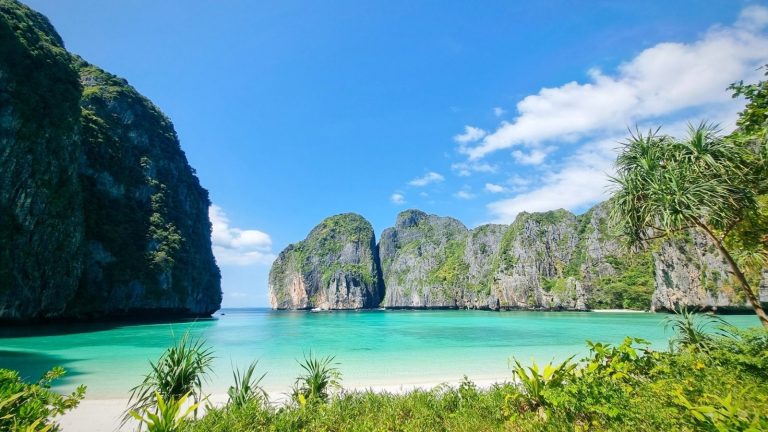
In the movie, Jurassic World: Rebirth, Krabi’s striking landscape of limestone cliffs, lush forests, and cascading waterfalls made it a fitting setting for dinosaur-themed adventures.
In neighbouring Phang Nga province, the spectacular scenery of Phang Nga Bay with its towering limestone cliffs and surreal rock formations created a perfect backdrop for the film’s prehistoric adventure. The bay is sprinkled with islands, caves, and secret lagoons, making it easy to picture dinosaurs roaming this primaeval landscape.
Isaan: Thailand’s dinosaur heartland
While the fictional dinosaur adventures of Jurassic World were filmed in Southern Thailand, it is Northeast Thailand (also known as Isaan), which is the country’s real-life dinosaur heartland.

(Image: TAT Newsroom)
Fossil beds discovered in Isaan have revealed remains that date back more than 100 million years. Today, visitors to Thailand’s northeast provinces can trace this prehistoric heritage at local museums and even witness fossils in situ at excavation sites. Several of these sites sit inside national parks and forest sanctuaries, which add a dramatic backdrop for anyone on a dinosaur-hunting adventure. Evidence of dinosaurs has been discovered at various locations in Isaan, but the best three provinces to visit to learn more are: Khon Kaen, Kalasin and Chaiyaphum
Khon Kaen
Khon Kaen is one of Thailand’s premier dinosaur locations, and it’s an association that the province has eagerly adopted. Travelling around Khon Kaen, you will see dinosaur replicas and motifs popping up at various locations, including parks, lakes, and even at temples.

The Phu Wiang Dinosaur Museum is one of the most interesting sites in Khon Kaen. Located near several protected excavation sites, the museum is a showcase for Thai dinosaurs, with exhibits, dinosaur replicas, public trails, and research facilities. In particular, the museum focuses on discoveries made in and around Phu Wiang National Park. This includes species named after the area, Phuwiangosaurus, and Siamotyrannus.

(Photo: oekka.k / Shutterstock.com)
Khon Kaen’s fossil trail is more than a scientific collection; it’s an immersive experience. Visitors can walk trails past the landmark sites and marvel at the 15 m-long Phuwiangosaurus, early tyrannosaur ancestors, and more in museum exhibits. 
In August 2025, researchers announced the sixth new dinosaur species discovered at Phu Wiang, with vertebrae, neck bones, ribs, and teeth excavated within the boundaries of the National Park. This find bolsters Khon Kaen’s bid for UNESCO Global Geopark status.
Kalasin
East of Khon Kaen lies Kalasin. It was here in 2023 that researchers from Thailand and France unveiled an almost complete dinosaur skeleton, Minimocursor phunoiensis. The find was the 13th species discovered in Thailand. Found at the Phu Noi archaeological site, this discovery is particularly rare, as most finds in Thailand have historically been fragmentary.

Kalasin is home to the prestigious Sirindhorn Dinosaur Museum, the largest dedicated dinosaur museum and research centre in Thailand. Adjacent to the museum is the Phu Kum Khao Dinosaur Site, where visitors can see fossils in situ.
Chaiyaphum
Unlike Khon Kaen and Kalasin, there is no major dinosaur museum in Chaiyaphum. Despite that, the province is an important location with significant finds of long—necked giants like Isanosaurus and Psittacosaurus, which have helped researchers learn more about the roots of sauropod evolution.
Other locations
In addition to the locations mentioned above, dinosaur fossils have been found in various other provinces in Northeast Thailand. This includes Nakhon Ratchasima (Korat), where sauropod bones and fossils of ancient turtles have been discovered. Visitors can learn more at the Korat Fossil Museum, a regional fossil hub and part of the UNESCO-listed Khorat Geopark.
In Ubon Ratchathani, researchers have unearthed fossils of large herbivorous dinosaurs, prehistoric fish, and crocodilians. In Loei, the first dinosaur footprints (theropod tracks) in Southeast Asia were found in Phu Luang Wildlife Sanctuary. Fossilised remains of fish and early reptiles have also been found in Loei.
More fossils have been unearthed in Nong Bua Lamphu, while many dinosaur footprints have been found in Phetchabun and Nakhon Phanom.